
Reviewed · COOKING CLASSES
Traditional Indian Cooking Class in Goa, Anjuna [vegetarian]
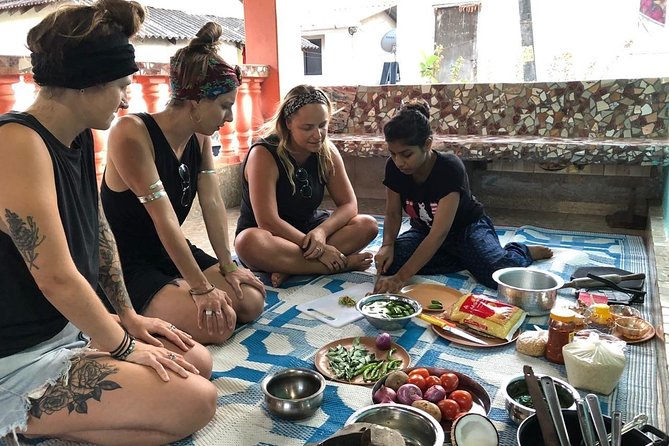
Goa can be loud and busy, but this cooking class takes you into a small village kitchen just behind the main action in Anjuna. What makes it interesting is that you are not just learning recipes, you are cooking with the same routines and spices used in a home setting, led by local women through Project Tres. I especially like the 5-dish vegetarian menu and the focus on aromatic, ayurvedic spice reasoning. My only real caution is the traditional setup, you may be asked to sit on the floor unless you request a chair.
For most people, the highlight is the human side. You will be welcomed, encouraged to join in, and you end up eating together after the cooking. Still, plan for a range in hands-on time, some parts can move quickly, and your role may be more chopping and prep than step-by-step cooking for every minute.
Key highlights before you go
- Women-led Project Tres experience with community impact tied directly to the class
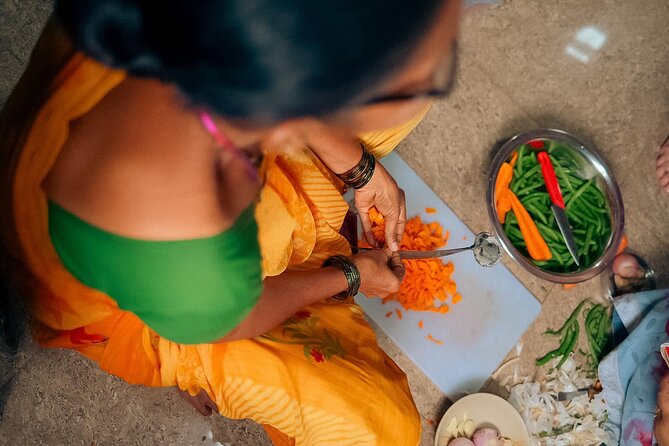
- Vegetarian cooking with local ingredients across a 5-dish menu
- Ayurvedic spice talk that explains why the spices work, not just how
- Small group size (max 6) for easier conversation and learning
- Traditional seating is part of the deal, but chairs and benches are available if you need them
- Mineral water is used for prep and served to guests
Where the class really happens: Project Tres in Anjuna
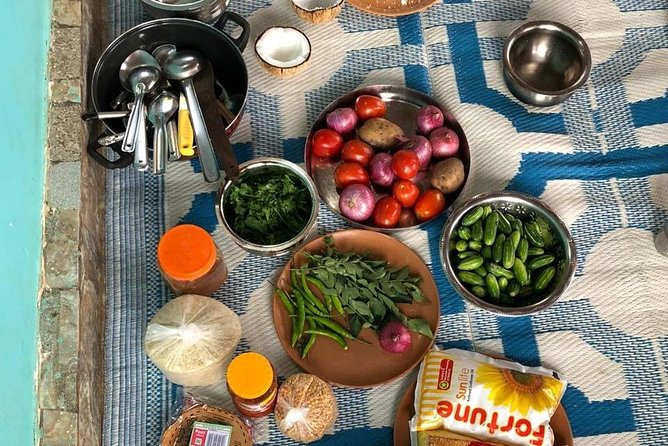
This is not a factory-style cooking school with identical aprons and a long queue for ingredients. The Project Tres centre is in Dmello Vaddo, in Anjuna (Goa), and the cooking happens in a small village community setting. It is a short walk from the usual Anjuna buzz, but the vibe you get is calmer, more homey, and more personal.
The group is capped at 6 travelers, so you are not squeezed into a big classroom rhythm. That matters because Indian cooking is hands-on and sensory, smell, heat, texture, and timing all show up while you cook. In a small group, it is easier to ask questions and get clarification when something feels unfamiliar.
If you are worried about comfort, here is the tradeoff. The class is prepared quite traditionally, which often means floor seating. The good news is there are chairs and bench seating available for anyone who struggles, as long as you let the host ladies know.
More Cooking Classes in Goa:
- Pink City Cooking Class
★ 5.0 · 452 reviews - Five Course Cooking Class & Meal
★ 5.0 · 250 reviews - Veg and Non veg : Private Cooking Class in Delhi home (7 meal)
★ 5.0 · 226 reviews
The 3-hour flow: what you do and what you learn
The class runs about 3 hours, starting at 3:30 pm, and ends back at the meeting point. Expect the day to feel like a slow transition from arrival to cooking to sitting down for the shared meal. The experience is designed to teach you Indian home-food habits, including how spices are used and why they matter.
First, you settle in and meet the kitchen hosts
You start at Project Tres Centre (HPPW+MM, Dmello Vaddo, Anjuna, Goa 403509). After you arrive, you should expect a welcome that sets the tone: relaxed, friendly, and focused on making you part of the process. This is also when you will likely hear about the project behind the cooking classes and what it means for the women involved.
This is not just a backdrop story. When you know the purpose, the class feels less like entertainment and more like a shared effort, because the class contributes directly to the community.
Then, the spice lesson starts before the first stir
You will discover local flavors, aromas, and learn how Indian food culture connects to spices, including their ayurvedic properties. In practical terms, this gives you a mental framework you can use later when you cook at home. Instead of memorizing one recipe, you learn how spice blends and fat or heat influence flavor.
Hosts use local ingredients, and you will be working in a traditional style. That means you might see methods and species used that you do not recognize. If you are sensitive to certain ingredients or have allergies, this is the moment to speak up clearly so the team can adjust.
Line these Goa options up side by side
- 5 Senses Tour – Old + New Delhi, Workshops, Lunch all inclusive
★ 5.0 · 386 reviews - Indian Cooking Class in an Authentic Local Home – Learn 6 Dishes
★ 5.0 · 195 reviews - Durga Cooking Class
★ 5.0 · 159 reviews - Private Guided Cooking Workshop Experience in Jodhphur
★ 5.0 · 158 reviews
Next, you cook a 5-dish vegetarian menu
You will cook a 5-dish vegetarian menu. The details of each dish are not listed here, so your best move is to show up ready to learn from the process rather than chase a specific dish name. What I can tell you, based on how these classes usually work, is that the menu is structured so you understand how one spice base or technique supports multiple dishes.
Hands-on levels can vary. Some people feel fully involved, while others end up doing more chopping and prep than every single step. If you want to do more than assist, tell the ladies early that you want the widest possible hands-on role. The class seems open to questions and participation, and that usually improves the learning curve a lot.
Finally, you eat what you cooked together
At the end, everyone shares the meal together. This is one of the most satisfying parts, because you get to taste the results right away, not days later when you forget what you did wrong or right. You also get a chance to ask what you are tasting, how it was built, and how to recreate it with confidence.
The 5 dishes and the spice logic you can take home
The menu is vegetarian, and it is built around aromatic spices and local ingredients. The real value for you is not just the final taste, it is the pattern behind it. When you understand the role of spices, you stop treating Indian cooking like a mysterious box of powders and start treating it like a system.
Here is what that means in everyday terms:
- You learn how spices are added and when, because timing changes flavor.
- You learn how ayurvedic thinking gets translated into cooking decisions, like balancing heat and aroma.
- You get better at tasting and adjusting, which is the main skill that translates after the class.
Also, mineral water is used for preparations and served to guests. That is a small detail, but it can make you feel more comfortable about digestion and hydration in Goa.
Seating, comfort, and how traditional actually feels
The traditional setup is the only major friction point. You should prepare to sit on the floor during parts of the class. That is not automatically a problem if you are flexible and used to it, but it can be if you have knee or back limitations.
The hosts are willing to accommodate. If you need a chair, tell one of the ladies. Feedback also suggests that chairs and bench seating can be available if you struggle getting down.
My practical tip is to plan for your comfort before you arrive. Bring something you can sit in easily (light layers help in Goa), and do not assume you will be comfortable once the cooking starts.
Value in the price: why $39.27 can feel worth it
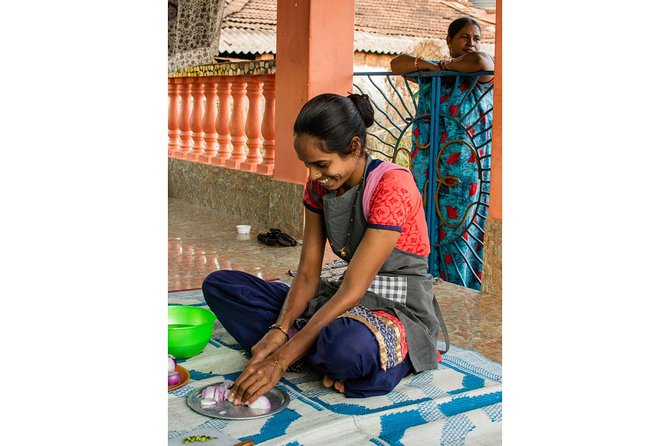
At $39.27 per person, this is not a bargain-priced souvenir activity, and it is not a luxury, high-end class either. The value comes from three things: you get a real home-style experience, you cook a full menu (not just watch), and the class ties to economic support for women through Project Tres.
The small group size matters for cost-per-person value. In a class capped at 6, your learning time per person is usually higher than in bigger groups. And because it is vegetarian with local ingredients, you are not paying extra for specialty imported products.
You also pay for a direct local impact. Each cooking class contributes directly to the women in the project. If responsible tourism is part of what you care about, this is a case where your money flows somewhere meaningful.
How to get the most hands-on learning (without stressing)
If you want to leave with confidence, aim for participation early. When you arrive, look for the moment to ask how you can help with the next dish. Then commit to asking small questions during each stage.
Also, manage your expectations about pacing. This is a traditional cooking flow, and certain steps can happen quickly, especially if the hosts are juggling the whole menu. If your goal is to learn every step in detail, your best strategy is to ask for the explanation as you go, even while you are doing prep.
Communication can be a variable too, since the hosts may naturally talk in their preferred language during the cooking. You can still get a lot by asking questions like what spice comes next and what texture they are aiming for. Gestures and tasting help a ton when language is limited.
Weather and timing: the simple stuff that affects your afternoon
This experience requires good weather. If weather cancels it, you should be offered a different date or a full refund. Since it starts at 3:30 pm, plan a normal, flexible afternoon rather than a tight schedule.
Confirmation is provided within 48 hours, subject to availability. You will also receive a mobile ticket, which is handy if you are trying to travel light.
A quick note on vegetarian vs seafood
This specific class is vegetarian, with a 5-dish menu. If you want a seafood option instead, there is a separate seafood alternative available through a different link. If that matters to you, double-check you are booking the vegetarian version before payment.
Should you book this Goa cooking class in Anjuna?
Book it if you want a women-led, home-style vegetarian Goa cooking class that focuses on spices and culture, not just a slideshow. It is a strong choice if you enjoy food smells, hands-on kitchen work, and ending with a shared meal.
Consider another option if you need a very formal, step-by-step instruction style where you do nearly every cooking task without waiting. Also, if floor seating is a dealbreaker, message ahead and request a chair so the setup works for you.
If you do book, bring a curious mindset, ask what you are doing while you do it, and be ready to eat what you helped make.
FAQ
What time does the class start in Anjuna?
The class start time is 3:30 pm and the experience lasts about 3 hours.
Is the cooking class vegetarian?
Yes. The class menu is a 5-dish vegetarian program made with local ingredients.
How many people are in the group?
The group size is limited to a maximum of 6 travelers.
Where do I meet the hosts?
Meet at Project Tres Centre, HPPW+MM, Dmello Vaddo, Anjuna, Goa 403509, India.
Do I have to sit on the floor?
The class is prepared in a traditional way, so you may be asked to sit on the floor. If you need a chair, you should let one of the ladies know.
Do you use mineral water?
Yes. Mineral water is used for the preparations and is served to guests.
What is the cancellation policy if the weather is bad?
You can cancel for a full refund if you cancel at least 24 hours before the experience start time. The experience requires good weather, and if it is canceled due to poor weather, you will be offered a different date or a full refund.
Latest reviews in from Goa
- Panjim Heritage Walk for a cultural immersion in Goa★ 5.0 · 16 reviews
- Margao City Food Trail by Make It Happen★ 5.0 · 16 reviews
- Capital City, Churches & Forts Of Goa, Old Goa Churches, Panaji City.★ 5.0 · 18 reviews
- Goa Kayaking in Spike’s River★ 5.0 · 20 reviews
- Private Portuguese Heritage Tour: Se Cathedral, Basilica of Bom Jesus and Dona Paula Beach in Goa★ 4.5 · 21 reviews
- Mangroves Magic Goa Kayaking Experience★ 5.0 · 21 reviews
- Goa Kayaking Spike’s Salonia Backwaters Kayaking Experience★ 5.0 · 24 reviews
- 3-Day Private Taj Mahal, Agra and Delhi Tour from Goa or Mumbai★ 5.0 · 26 reviews
Cooking Classes, compared.
Veg and Non veg : Private Cooking Class in Delhi home (7 meal)
Read our review →
Indian Cooking Class in an Authentic Local Home – Learn 6 Dishes
Read our review →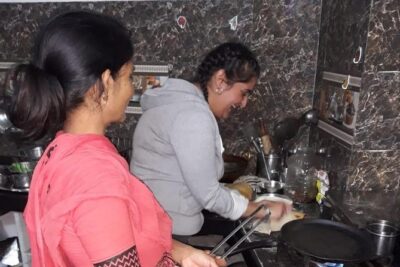
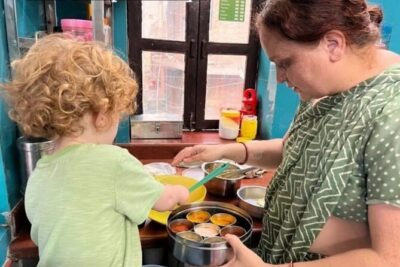
Private Guided Cooking Workshop Experience in Jodhphur
Read our review →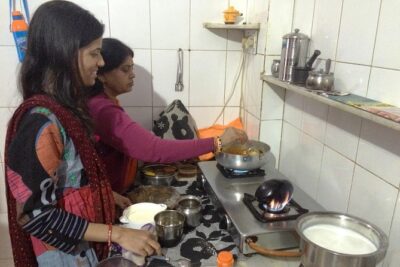
Jaipur Market Tour & Vegetarian Rajasthani Home Cooking Class
Read our review →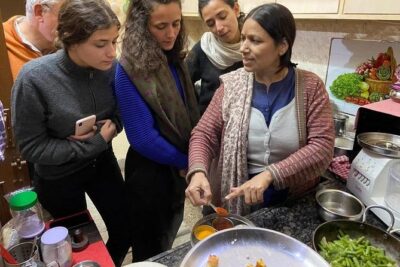
Cooking Class in Jaipur – Family Experience with Meal & Transport
Read our review →Browse the lists this tour appears in