
Reviewed · BANGALORE TOURS
Bangalore: UNESCO Belur & Halebidu + Shravanabelagola Tour
What makes this Bangalore day trip interesting is the tight sweep of Shravanabelagola plus the UNESCO temple stops at Belur and Halebidu, all in one long day. You get a guided route that keeps the focus on what you’re seeing, not on figuring out roads, timings, and tickets.
Two things I like a lot: the central hotel pickup and drop-off (you start and end with less hassle), and having breakfast and lunch included so you can concentrate on temples instead of hunting for food. That combo is especially helpful when you’re spending most of the day outdoors and walking.
One thing to consider is the day runs long, and the itinerary assumes moderate physical fitness with stairs and uneven ground at ancient sites. If you’re hoping for a slow, relaxed stroll, plan for a tougher pace than a typical half-day outing.
Key highlights to know before you go
- Early 6:30 am start helps you beat the worst of the heat and crowd pressure
- Shravanabelagola’s giant Gomateshvara monolith is the day’s headline for scale and Jain significance
- Halebidu’s Hoysaleswara Temple is famous for intricate stone work and dense frieze storytelling
- Belur’s Chennakeshava Temple is a strong finale, with hours to take in the carvings
- Small group size (up to 8 per booking, with a total cap of 10) keeps the day feeling manageable
- Meals and key admission fees are handled, so you spend less time in lines
A full UNESCO day from Bangalore, starting early at 6:30
This trip is built for travelers who want big-ticket heritage without the stress of self-planning. The start time is 6:30 am, and you’ll be back late in the day, after three major monuments and a couple of breaks built in.
You’re riding in an air-conditioned vehicle, which matters here. The drive time adds up, and once you’re out at temples, you’ll want that comfort for the ride segments between sites.
The overall vibe is “one day, three masterpieces.” That’s a lot to process, but the structure is helpful. You’re guided through each location so you’re not just looking at stone, you’re getting clues for what you’re seeing.
Line these Bangalore options up side by side
- Discover Bangalore Through the Ages – Guided Tour with Lunch
★ 5.0 · 417 reviews - Best of Mysore, UNESCO Somnathpur Temple & Srirangapatna Day Tour
★ 5.0 · 384 reviews - (Mysuru) Mysore Day Out – A Royal Experience Private Tour from Bangalore
★ 5.0 · 302 reviews
Why this Shravanabelagola, Belur, and Halebidu loop works so well
The magic is the contrast. Shravanabelagola gives you a giant Jain monolith and a pilgrimage atmosphere tied to learning and spirituality. Then you move into Hoysala-era architecture with stone carving that reads like visual storytelling.
Belur and Halebidu are both UNESCO-listed Hoysala gems, but they feel different once you’re inside the temple world. Halebidu leans hard into intricate exterior friezes. Belur’s Chennakeshava Temple feels like a more unified showpiece, with carvings that keep pulling your eyes from base details to higher levels.
If you’re trying to “get your bearings” with South Indian temple art, this day is efficient. You get a guided explanation at multiple stops, so the symbolism and craftsmanship make more sense by the time you reach the last monument.
Price and value: what your $179.77 covers (and what it doesn’t)
At $179.77 per person, you’re paying for a lot more than transportation. You’re buying: guided interpretation across the monuments, central hotel pickup and drop-off, air-conditioned travel, entry fees and admission tickets, plus breakfast and lunch.
That’s the value equation. A self-guided day can feel cheaper on paper, but you still need to arrange reliable transport, manage tickets, and deal with long gaps where you’re tired and hungry. Here, meals are already solved, and the guide helps you spend time seeing rather than translating stone on your own.
What’s not included is simple: alcoholic drinks and personal shopping. So if you’re trying to keep costs predictable, you can treat your spending as mostly optional extras for snacks, water, and souvenirs.
Kunigal stop: the quiet reset before the temples
Your morning drive includes a scenic stretch, and you’ll pause around Kunigal as part of the day’s flow. It’s not the headline attraction, and that’s a good thing, because it gives you a chance to reset before you start climbing into temple time.
This is where you benefit from the pacing. After the early start, a break helps you stay steady for the longer monument sessions later. Also, the tour marks this stop as having admission ticket free, so the focus stays on comfort and timing.
If you’re the type who hates “dead time,” this may feel like a filler. But for me, a short reset matters on a long heritage day, and this stop functions as that buffer.
A different shape of Bangalore day:
- Bangalore city tour with English guide & multi language support
★ 5.0 · 268 reviews - Mysore tour from Bangalore by tourism ministry approved company
★ 5.0 · 226 reviews - Bengaluru Pete City Market Half-Day Walking Tour
★ 5.0 · 163 reviews - Experience Bangalore – City Tour, Authentic Food & market (Food/Culture/History)
★ 5.0 · 156 reviews
Shravanabelagola: the giant monolith and why it draws pilgrims
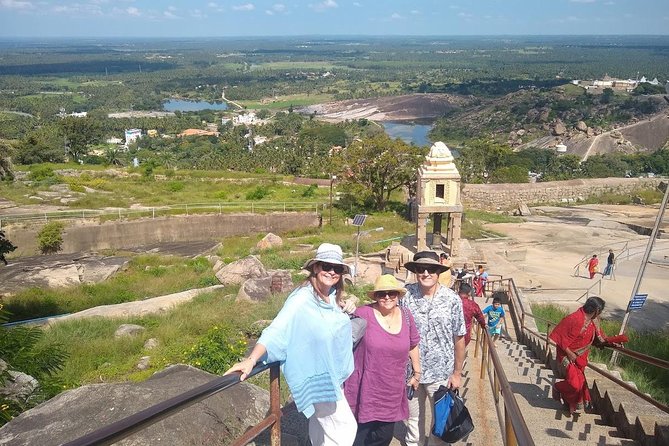
Shravanabelagola is one of those places where scale hits you fast. The town is tied to Jain pilgrimage and is considered around 2,300 years old, so you’re not just touring a single statue. You’re entering a spiritual setting with deep roots.
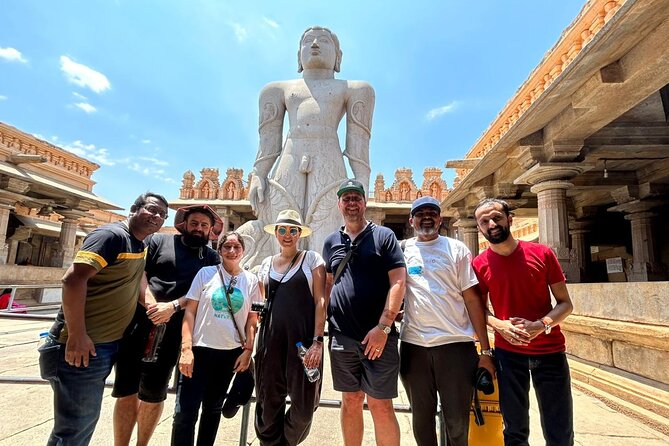
The big moment is the Gomateshvara statue, widely described as India’s tallest monolith. The effect is hard to fake with photos. When you see it in person, you realize you’re standing at the end of a long tradition of devotion and craftsmanship.
This is also a spot where a good guide pays off. Without context, you might just admire size and carving. With explanation, you start noticing how the site’s meaning shapes how people approach it, pause, and look.
You’ll have about three hours here, which is enough time to take in the statue views and still move at a comfortable pace. If you’re sensitive to stairs or uneven paths, keep that in mind, because the approach areas can be demanding.
Halebidu and the Hoysaleswara Temple friezes
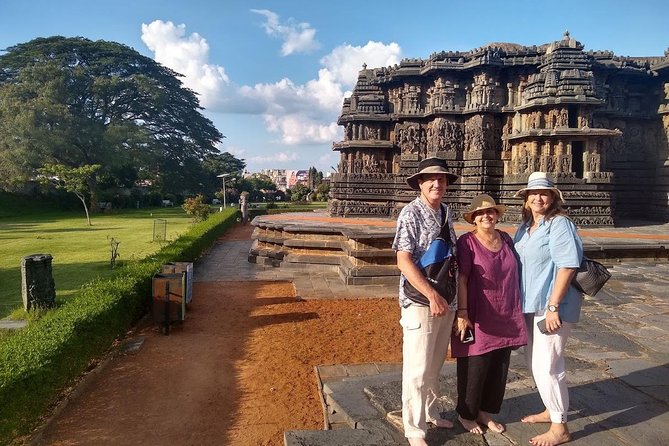
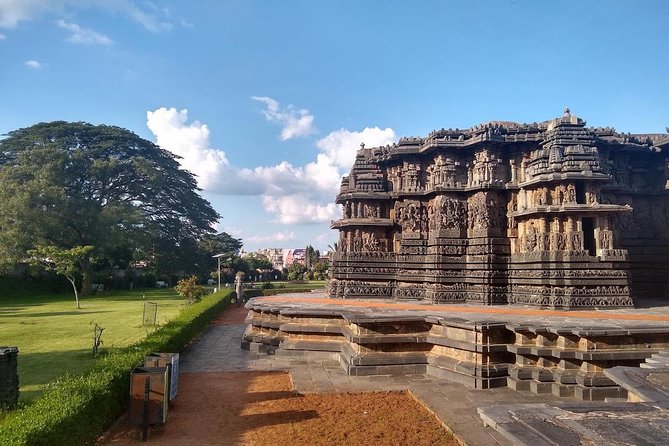
Next comes Halebidu, home to the UNESCO-listed Hoysaleswara Temple. This is the stop that tends to reward people who love detailed stonework. You’re looking at Hoysala craftsmanship, and the reputation is earned.
The temple’s fame comes from the density of carved decoration. The stone surfaces are covered in scenes and patterns that feel almost engineered. You can spend a long time just following the shapes around, and that’s why the allotted time matters.
You’ll have about two hours at Halebidu. That’s not a full “study day,” but it’s enough time to see the major carving zones and get the story behind at least a few key sections. I like that the schedule doesn’t overstuff this stop. If you rush Halebidu, you lose the pleasure of slow looking.
One practical note: carving details often reward the light direction. Midday brightness can help some textures pop, but it can also wash out fine contrast. If you care about photo detail, try to move when your guide starts pointing out specific friezes.
Belur lunch break: a real reset, not just a stop on the map
After Halebidu, you’ll pause for lunch in Belur at a quiet local spot. It’s a welcome break after temple walking, and it’s scheduled so you don’t feel like you’re eating on the run.
Lunch is included, which is a big deal for value. Food plans can be a hidden cost when you travel independently, and it also changes the energy level of the rest of your day. When you’re fed properly, your eyes are clearer for the next carvings.
The schedule gives you about two hours around Belur for this part of the day. That’s enough time to eat, use the facilities, and regroup before the final monument.
If you’re traveling with someone who gets cranky when meals run late, this timing will probably feel like good planning.
Belur’s Chennakeshava Temple: the finale with lasting wow-factor
The last stop is Belur’s UNESCO-listed Sri Chennakeshava Temple. If you want a strong visual finish, this is it. The temple has captivated art lovers and pilgrims for over 900 years, and you can feel that long timeline once you start focusing on the stone details.
The site experience runs about four hours, which is generous compared with many “one day heritage” itineraries. That extra time matters here because the carvings reward attention, not speed.
This is where you should slow down. Pick a section, look at it for a few minutes, then let your guide connect it to the bigger story. Then move to the next cluster of sculptures. If you try to see everything at once, you’ll feel like you missed the point.
Also, remember this is an outdoor setting. Even with a long visit, you’ll want breaks. Drink water when it’s offered, and adjust your pace. You want a finale that ends with satisfaction, not exhaustion.
The guide makes the day: stories, symbolism, and what you’ll actually remember
A big reason this tour feels worth it is the guide. The day is structured from the first monument onward with a certified, English-speaking guide who explains history and symbolism.
In the experiences I’ve read about, guides like Praveen and Dinna get specific credit for detailed explanations and genuinely caring attention to the group. That matters because temple interpretation is not just facts. It’s learning how to read stone: which figures matter, what patterns signal, and why certain forms show up again and again.
You’ll likely come away with a clearer sense of what to look for. Instead of seeing carvings as random decoration, you’ll see them as communication.
Small group size and comfort details that add up
With a maximum group size of 8 per booking, plus an overall cap of 10 travelers, you won’t feel like you’re part of a massive moving crowd. That helps at temples where space can get tight, and it makes the guide’s explanations easier to hear.
The air-conditioned vehicle is also more than a luxury. It turns long travel segments into tolerable downtime, so you arrive at each stop with enough energy to really look.
And because pick-up and drop-off are included from central hotels, you save the mental load of coordinating transport at both ends of the day. That’s the kind of convenience you notice when your day is heavy.
What to pack and how to dress for a 12 to 14 hour heritage day
Dress code is smart casual. That’s good guidance because temple visits often have rules around modesty and comfort.
For a day like this, plan for: comfortable walking shoes, breathable clothes, and a light layer for early morning. You’ll also want sun protection and a refillable water bottle. Temples are worth the effort, but you’ll still be managing heat and walking.
If you tend to get tired during long sightseeing days, plan a slower pace. The itinerary works best when you follow your guide but don’t sprint between photo stops.
Who this tour suits best, and who might want a different style
This works well if you want three major monuments in one day and you like guided context. It’s a great fit for first-timers who feel overwhelmed by temple complexity, and for anyone who enjoys craftsmanship and visual storytelling.
It’s also a strong option if you value convenience: hotel pickup, AC travel, entry fees handled, and meals included.
You might choose something else if you dislike long days, or if stairs and rough surfaces are a problem for you. The tour does require moderate physical fitness, and Shravanabelagola in particular can be demanding depending on your route and pace.
Should you book this Bangalore UNESCO day trip?
Book it if you want an efficient, guided heritage day with real value. You’re getting a full circuit of major monuments, a certified English guide, and breakfast plus lunch, all while being transported comfortably from your hotel.
Skip it if you want a relaxed, slow travel pace, or if you need a trip with minimal walking and stairs. Also consider that the experience is subject to favorable weather, so if you’re visiting during uncertain conditions, have flexibility.
If you like your sightseeing with context and you’re ready for a long but rewarding day, this one is a solid choice. The day ends with Belur’s Chennakeshava Temple, and that finale is exactly the kind of last stop that makes the whole route feel worth it.
FAQ
What time does the tour start?
The tour start time is 6:30 am.
How long is the tour?
It runs about 12 to 14 hours.
Does the price include entrance fees and meals?
Yes. All monument entry fees and admission tickets are included, and both breakfast and lunch are included.
Is hotel pickup and drop-off included?
Yes, central hotel pickup and drop-off are included.
What language is the tour guide?
The tour is English only.
What is the group size?
The maximum is 10 travelers, and the booking is also listed as up to 8 people per booking.
Latest reviews in from Bangalore
- Filter Kaapi: A food walk by tourism ministry approved company★ 5.0 · 26 reviews
- Treasures of Mysuru – day tour★ 5.0 · 27 reviews
- Bangalore Running Tour with Breakfast★ 5.0 · 27 reviews
- Traditional Gowda Cooking Class and Meal in a Bangalore Home★ 5.0 · 31 reviews
- Bangalore Evening Food Street Walk and Market Visit★ 5.0 · 32 reviews
- Private Cooking and Dining Experience in Bengaluru★ 5.0 · 35 reviews
- 2-Day Tour to Taj Mahal and Agra from Bangalore with Both Side Commercial Flight★ 5.0 · 36 reviews
- Affordable Bangalore Airport Transfer★ 4.0 · 45 reviews
Bangalore Tours, compared.
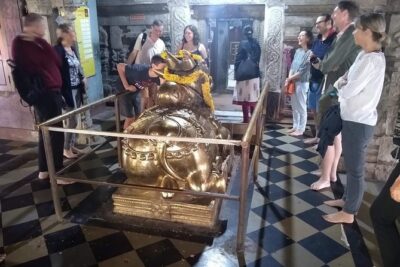
Discover Bangalore Through the Ages – Guided Tour with Lunch
Read our review →
Best of Mysore, UNESCO Somnathpur Temple & Srirangapatna Day Tour
Read our review →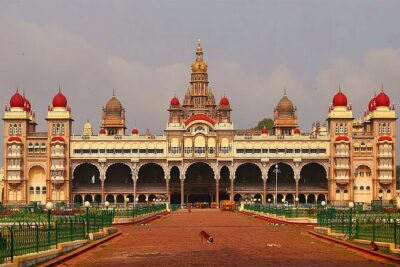
(Mysuru) Mysore Day Out – A Royal Experience Private Tour from Bangalore
Read our review →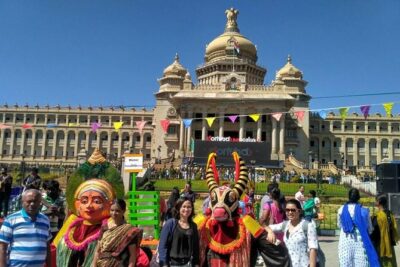
Bangalore city tour with English guide & multi language support
Read our review →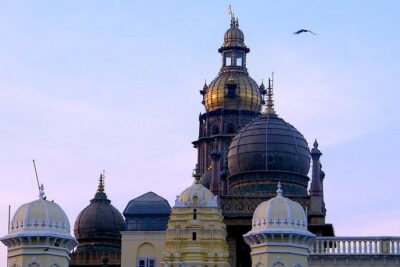
Mysore tour from Bangalore by tourism ministry approved company
Read our review →
Bengaluru Pete City Market Half-Day Walking Tour
Read our review →
Experience Bangalore – City Tour, Authentic Food & market (Food/Culture/History)
Read our review →Same Day Taj Mahal/Agra Tour From Bangalore with Return Flight
Read our review →Browse the lists this tour appears in